
Success through Organizational Learning
Learning beats "improvement" every time

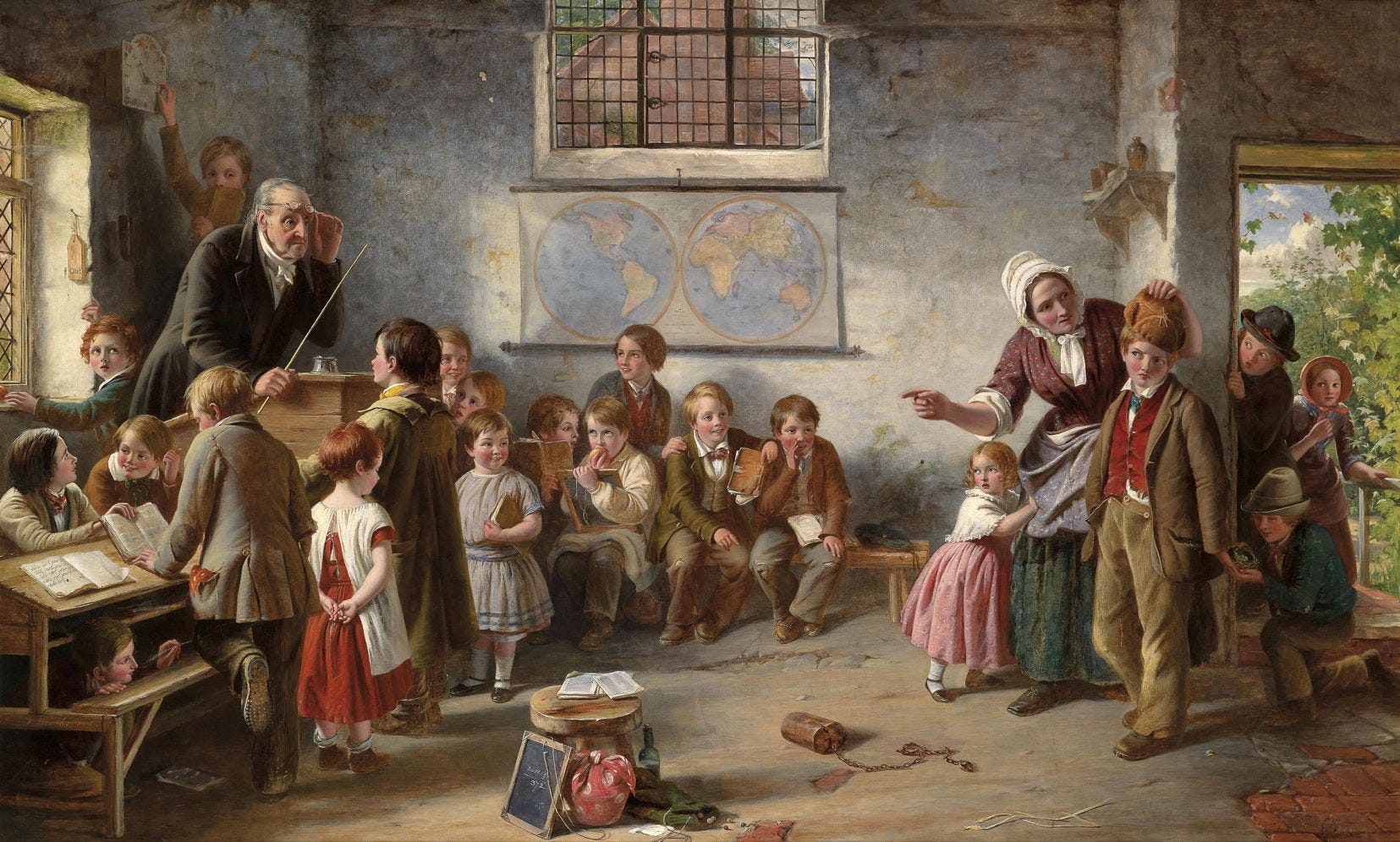
What separates organizations that get stronger over time from organizations that spin their wheels? One type gets more robust with each passing year, growing not just in speed and efficiency, but also in resilience. These organizations far exceed the norm which stays constantly busy, but pathologically stagnant, despite all the work of “improvement” floating around the water cooler.
The core issue is that most organizations are optimized for action and not for learning. Businesses are incentivized to decide, execute, and claim unconditional victory before hastily moving on. Within this paradigm, it becomes extremely difficult to build up a body of knowledge about the business: how it runs, what works, what doesn’t work, what system archetypes are encountered and how they are resolved. Organizations built towards unreflective action, success, and conquest are not built to observe the impact of their actions. Without that observation, improvement becomes a kind of controlled guessing. Often confident, occasionally successful, but rarely cumulative. The result, is what we have expected to see – limited growth, lots of firefighting, and the veneration of heroic leaders who carry the team on their backs over the finish line. Here, I present another, more sustainable and more impactful way to run an organization.
What Learning Actually Means
John Dewey, the American philosopher and educational reformer, offers a useful starting point. Dewey’s view of learning was not about instruction or information transfer. It was about experience becoming meaningful through reflection. In his framing, you don’t learn something simply because you were told it, or even because you did it once. You learn when you encounter the consequences of your actions, notice them carefully, and revise your understanding of how the world works. Note here that without that intentional reflection and revision the effort of observation and documentation mean nothing.
That idea becomes far more powerful when applied to organizations. If learning depends on reflection on consequences, then most organizations are structurally underpowered as learning systems. They generate plenty of experience through projects, initiatives, and product launches. They may even have a robust system of job aids and process documentation to prevent backsliding and to ease onboarding of new hires. But unable to convert these observations and artifacts into understanding, the organizations fail to compound their experiences and leverage their cumulative understanding. Actions happen faster than interpretation. Interpretation, when it exists at all, is often informal, anecdotal, or forgotten before the next initiative begins.
Observation and interactions
Another influential technologist and learning theorist of the 20th century is Buckminster Fuller. Fuller pushed a related but more structural critique of learning. Fuller’s central argument was that problems cannot be understood in isolation from the systems that produce them. In his view, most failures arise not from a lack of intelligence, but from incomplete perception. We see parts of a system, but not the relationships between them. So we intervene in one place, only to create unintended consequences elsewhere. [Note: if you’ve ever dabbled in the world of Six Sigma or Advanced Statistics, you’ll notice how similar this looks to Taguchi’s approach to improvement]
In organizational terms, this means that many so-called solutions are actually partial adjustments inside a much larger system that has not been understood. The result is invariably a sub-optimized output. If a process is changed, or a team is reorganized, or a new technique is introduced something invariably improves locally. But without system-level observation, it becomes very difficult to distinguish whether or not that improvement is maximized, and whether or not degradation has occurred in other areas. Perhaps the problem has just been displaced, not removed.
A flow diagram for learning
W. Edwards Deming took these philosophical and systems ideas and made them operational. His PDSA cycle, Plan, Do, Study, Act, is often described as a quality improvement framework. But its real power lies in creating a structure for learning, and taking actions only after learning has been completed.
Of the PDSA cycle, Deming himself called it “A flow diagram for learning.” In his mind, improvement was a secondary effect, but the primary cause was the acquisition of knowledge. His PDSA cycle is a method to obtain and perpetuate organizational learning and knowledge management and it should not go unnoticed.
In practice, many organizations run a distorted version of this cycle. They plan carefully, execute quickly, and then infer results based on surface-level signals. The Study phase gets compressed into reporting, dashboards, or retrospective storytelling. What gets lost is the disciplined attempt to understand what actually happened, why it happened, and what it reveals about the underlying system.
Another pathological adulteration of this process is the shotgun approach – where multiple proposed solutions are tried all at the same time. However, this approach obscures the effect of any one solution, making it impossible to understand what impact each solution had on the overall system. And interactions with the rest of the system? Forget it. No chance of knowing.
Deming asserted that without structured study, organizations don’t really improve. They accumulate interventions which may appear rational in isolation, but without learning, the system never becomes more intelligible to itself. It simply becomes more complex. And complexity without understanding is leads to even greater confusion.
Market-oriented learning
This idea of learning-driven organizational performance isn’t just an academic theoretical idea, and it’s applications go far beyond Deming’s world of 20th century quality and operations. The Lean Startup cycle of Build, Measure, Learn, is likewise explicitly designed to make learning the unit of progress rather than feature delivery or raw output. The idea is simple: build something small, observe how it behaves in reality, and update your understanding of the system accordingly. The revolutionary idea of this framework is not that it is so very different from Deming’s PDSA, but that it’s directed at customer behavior and the market. One way we see the maturity of this idea is in A/B testing, where businesses can optimize customer interfaces based on many trials, each with large swaths of trial data that the internet and digital economics makes possible.
The Correlation Problem
Ask any business leader about their commitment to organizational learning and they will assure you of their commitment. In my experience, most of these leaders are entirely genuine, even if misguided and wrong. There is a breakdown between what most people think learning is and what it actually is.
The dysfunction emerges from the assumption that if something changed and a metric moved, then the change caused the movement. In complex systems, this assumption is almost always too simplistic. Multiple variables shift simultaneously. External conditions fluctuate while lag effects distort perception. Yet many people will often encode cause and effect too quickly, turning correlation into doctrine. Over time, this leads to something even more costly: the accumulation of best practices that were never rigorously understood in the first place. They worked once, or appeared to work, and were therefore standardized. But the organization no longer remembers what was actually learned, or whether the conclusion still holds under new conditions. Knowledge becomes procedural or doctrinal rather than conceptual. The organization follows the recipe but has forgotten why.
Tribal knowledge
Even worse, organizations often fail to document what was genuinely learned during experimentation. The result is that learning becomes local and temporary. One team discovers something valuable through experience, but that insight does not survive migration across teams, time, or context. It remains embedded in individuals rather than in the system itself. When those individuals leave, the insight leaves with them.
This is where the cost becomes structural. When organizational knowledge is weak, organizations compensate by relying on exceptional individuals. They hire for rare experience, deep intuition, or high performance under ambiguity. These individuals can be extremely effective, but they also mask the absence of a strong learning system. The organization appears to function well, but its performance is disproportionately dependent on people rather than processes.
A stronger system does the opposite. It assumes variability in human capability and builds structures that absorb that variability. It captures observations in ways that persist beyond individuals. It makes reasoning visible, not just outcomes. In doing so, it reduces the pressure to constantly find the perfect hire or the heroic operator who can navigate ambiguity alone. People still matter enormously, but they are no longer the primary source of stability.
Systems Thinking to the rescue
When properly applied, systems thinking shifts the center of gravity away from individuals and toward structure. The organization becomes less like a collection of talent and more like an evolving system of feedback loops, constraints, and information flows. The improvement is baked in rather than dependent on heroics.
In that context, human-centered design also takes on a deeper meaning. It is not just about usability or experience. It is about designing systems that reflect actual human behavior rather than idealized assumptions. And importantly, it is about creating feedback-rich environments where human interaction produces observable learning rather than invisible noise.
The ultimate goal is not to eliminate error or uncertainty. Perhaps this is the part that is most incongruent with the way organizations are run and incentized today. We seek certainty even when it is impossible in a complex environment. Nevertheless, to pursue organizational learning, the goal ought to be to make the system increasingly aware of itself through structured experience. Dewey’s experiential learning, Fuller’s systems perspective, Deming’s disciplined iteration, and the Lean Startup loop all converge on this same idea: knowledge is not something you declare at the end of an initiative. It is something you accumulate through repeated, structured engagement with reality.
Seen this way, the difference between improvement and learning becomes the difference between change that feels productive and change that compounds. Improvement can happen without understanding. But learning always changes the system that is doing the improving.
Conclusion
Organizations that focus on “improvement” tend to stay dependent on cycles of intervention. They are always doing something and almost always reacting. They rarely understanding anything new and never discover something for themselves. Organizations that optimize for learning gradually become something different altogether: systems that get better not because they try harder, but because they understand themselves more clearly with each iteration.
You finished the article!
it was free!
please:
Brilliant! As a naval engineer I apply this to the United States Navy. The decisive advantage in the Fourth Industrial Revolution may not belong to the nation with the best individual technologies, but to the nation whose institutions learn fastest.
The transition from the industrial-age fleet to the “New Robot Navy” is therefore less about replacing sailors with machines than replacing slow institutional learning cycles with software-speed adaptation.
In that sense, autonomy, AI, digital shipyards, and distributed manufacturing are not separate revolutions. They are components of a larger learning system. The future fleet is not just networked. It learns.
I often asked myself, why is it so difficult to apply what you explain in your articles. I think a big part is how we think about others. When leaders think they have to lead people, than the hidden message is: because you don't know what I know. And that is the barrier. In the moment where the leaders think they know more than others, the organizational learning cannot happen. I think a prerequisite of organizational learning is to accept that nobody is "above" or knows more than others. We must learn together. It starts with the mindset. What do you think?